An Interview With Indrani Ray on her Romance Film "Tea And A Rose"
Logline:
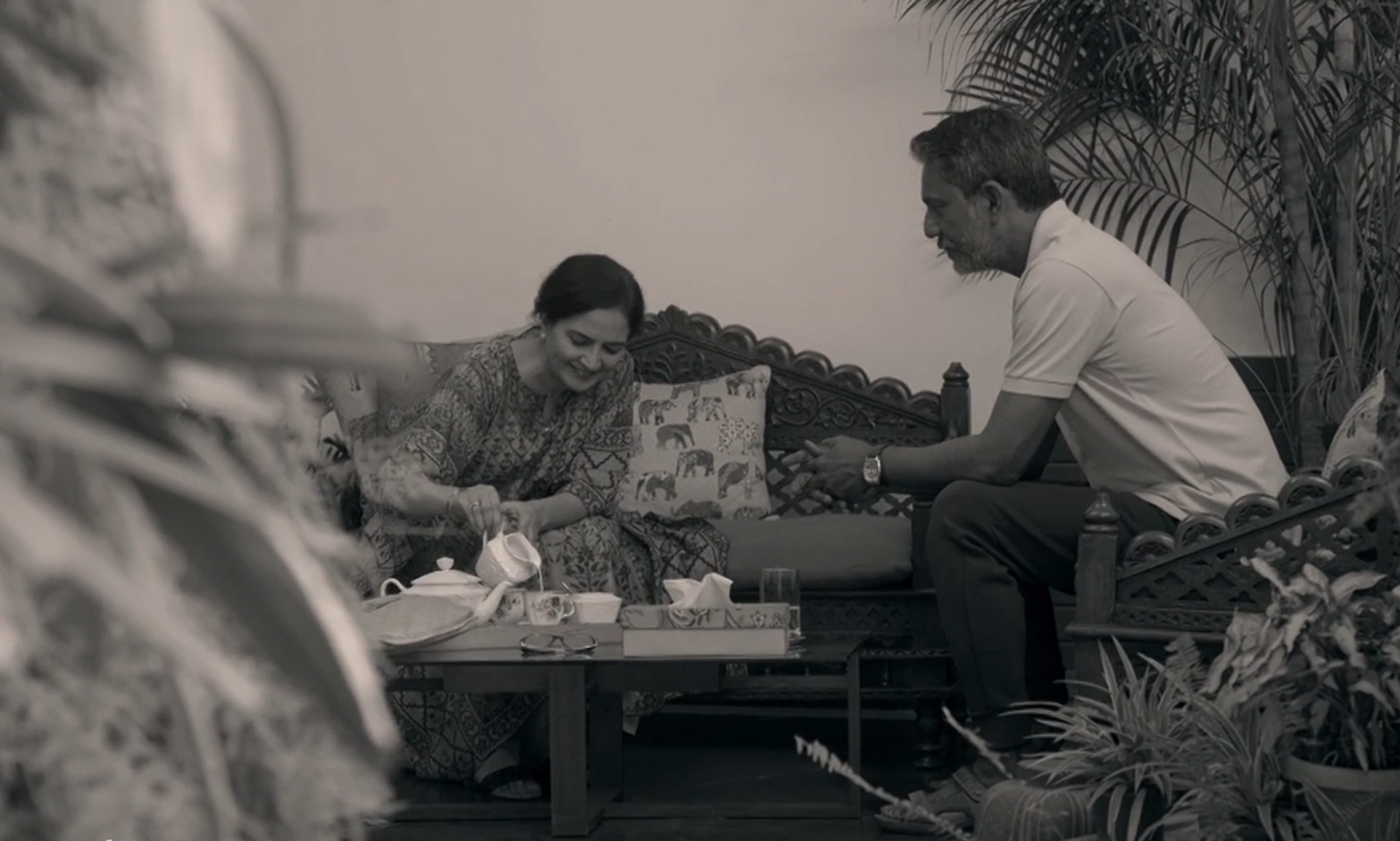
One September morning in 2020, as the world – worn down by the prolonged isolation – watched the pandemic unfold, Mrs.Khan and Mr.Sen – both widowed – perhaps edged closer to the beginnings of a new romance – over a cup of tea.
What inspired you to tell a love story between two widowed individuals during the COVID-19 lockdown?
I observed during the lockdown, when people experienced the bleakness that isolation can bring.
when things slowed down and there was time to ponder, amidst mountains of clinical heartbreaking statistics, love and relationships were getting calibrated as many reassessed what matters. There was a deeper understanding, perhaps which made people introspect and prioritise.
With the triptych I wanted to explore these deeply impacting personal realisations – insightful vignettes set in quiet monochromatic worlds as a bit of a visual metaphor, really. Tea and a Rose was the second film of the series.
Was Tea And A Rose based on any real-life observations or personal experiences during the pandemic?
Tea and a Rose springboarded from a story I’d heard – autumnal romance, second chances – both a bit of a social taboo in India – it spoke to me. I like to push the envelope gently with my films.
Originally, I’d set the screenplay in a park – a chance encounter during an evening stroll. When the lockdown was upon us, and my producing partner Tanvi Gandhi and I decided to make this film, it made sense to capture the zeitgeist of the time where people were suddenly acutely aware that this is one life – it felt more poignant and meaningful. I shifted the world. The story remained local. The emotions had global resonance.
What conversations did you have with your actors to help them portray quiet, mature love?
The script did most of the heavy lifting, as I write with a lot of detail. And fortunately, the actors were thoroughly invested (lucky me) from the get-go and came with their share of lived experiences.
Natasha (Rastogi) the female lead, was understandably nervous in the beginning that I wouldn’t be present physically, since it was a remote shoot. Rehearsals helped immensely where I guided her through the key emotional nuances and micro-actions. And the table read further helped iron out dialogue kinks – it always does, in my opinion. Some words may read nicely on paper but not so much to the ears.
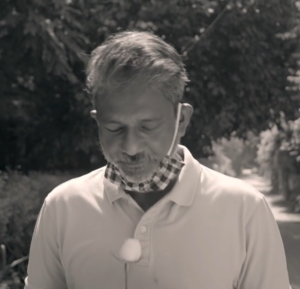
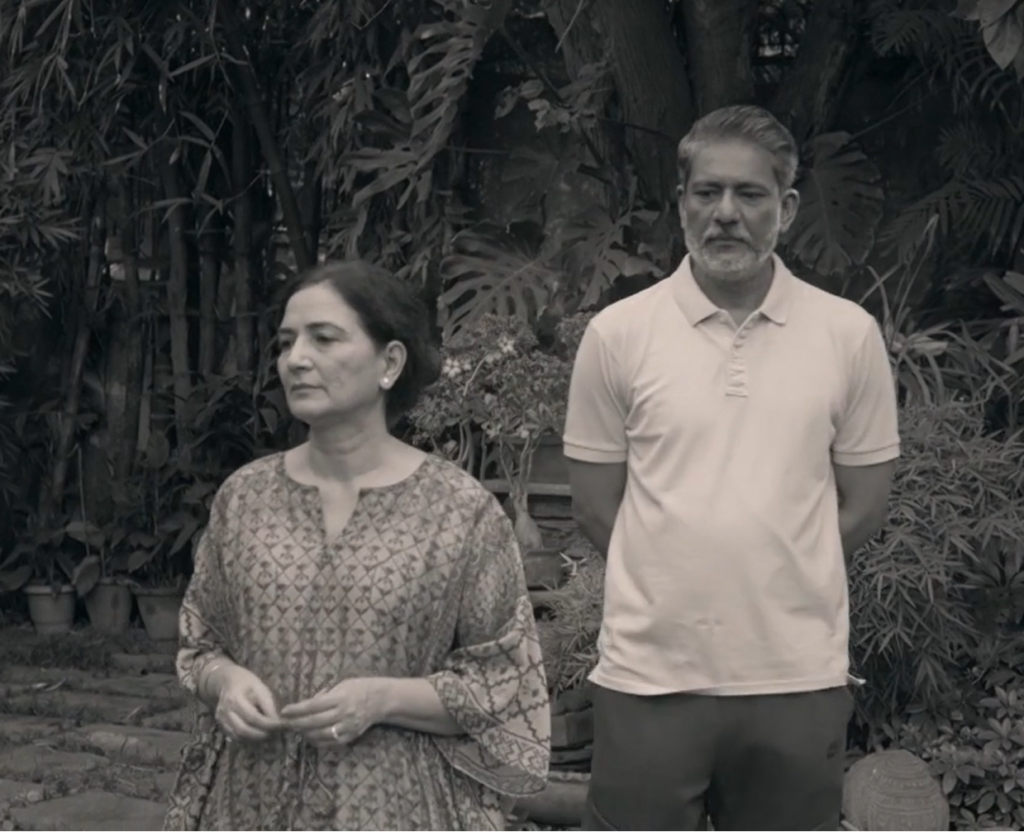
Of course, when you have an artist like Adil (Hussain) on board, the work automatically becomes easier. He is a true star and brought so much to the character. He’s the only actor who could play this part.
By the time we were on the floor, things were fairly well-oiled. That they were delighted to be playing romantic leads was a happy bonus. 🙂
Your film carries a nostalgic, almost monochrome aesthetic. Was this visual choice intentional? What did you hope to express emotionally through this subdued, minimal palette?
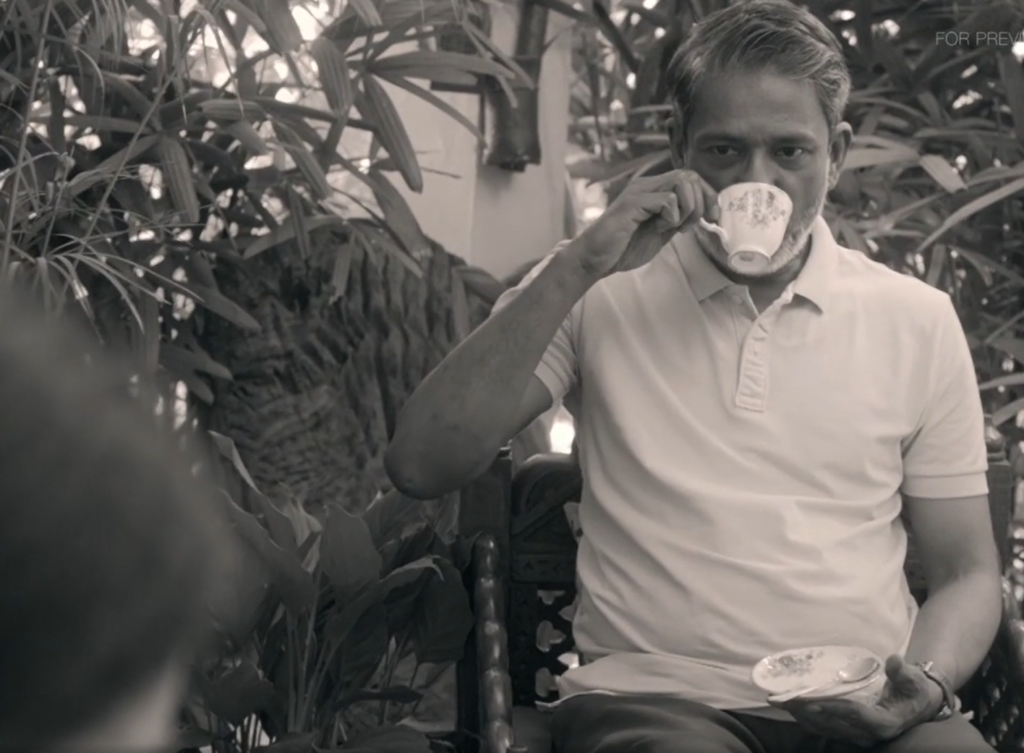
Very much so. The palette came from the grey emotional morass of the lockdown – everyone felt isolated, adrift, uncertain – in one way or another. Against that backdrop, I wanted unexpected human warmth to slowly emerge. When hope enters the frame, so does colour.
Music and Bengali language both play a gentle yet powerful role in the film. How did you use song and language together as storytelling tools to deepen the emotional tenderness of the narrative?
That happened quite organically. Being Bengali, we instinctively think through music. And we hum a lot randomly – happy, sad, nostalgic, mundane – we sing – and that found its way on its own. It often does in whatever I write – music is key to my creative expression. In fact, the first film in the triptych – A Short Hello – had no dialogue – just a Tagore song. His songs became an audio motif for all three films.
Do you believe music can sometimes communicate love more truthfully than dialogue?
Absolutely. Music works magic – so does silence. I’m a miser with words.
In Tea and a Rose, I wanted music to add a sense of playfulness, to gently lift the mood.
In a telling moment I used a blend of Sugar Plum Fairy and Bilambit laya (rightly suggested by my father –God rest his soul) as reference – soft, whimsical, naughty. Or when Adil’s character playfully hums a song – it says so much about that moment and the state of mind.
Do you think love during crisis feels different from love in normal times?
One hundred percent. A crisis pushes people to take chances they might otherwise have postponed. Or not taken. It makes you a little selfish in a good way I feel. The leads in the film were socially familiar for more than half their lifetime, and suddenly the axis shifted. Maybe the male lead nurtured a fascination for some time, but the lockdown made him “audacious”.
Was there a particular moment during the filmmaking process that stayed with you emotionally?
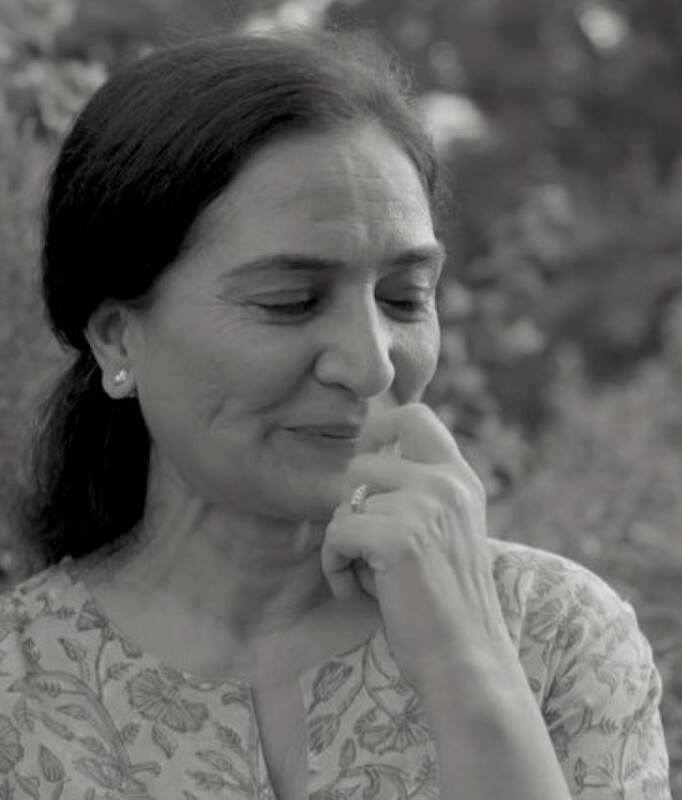
Yes – a lot of it stayed with me, actually. The conversation she has with her deceased husband, just as she begins to feel new hope, their walk in the garden, the tea in the porch, the cheeky exchange at the gate as he was leaving and the end bit when he calls, always make me smile.
We captured the truest spirit of that time, off and on camera, without compromising on quality. It was a litmus test I was excited to undertake as debut director.
The film has received multiple awards. How has this recognition affected your perspective on the film’s impact?
The film premiered in 2021. It all feels a bit surreal. We did not have deep pockets or a named mentor, which is why this outpouring of love has been humbling and incredibly satisfying. I feel truly blessed. We made it in crisis. It travelled in recovery. And it’s still resonating.
To think it all started with a casual phone call between Tanvi and me – crazy. We could do this because we were a team.
The audiences (many repeat ones) have been amazing as well. The way they connected with the film personally – how it struck a chord – continues to warm the cockles of my heart. I’ve actually had people come up to me at in-person screenings thanking me for making this film. In India, December romance is not that mainstream. Finally, that’s why we make films, do we not – to take our stories out there as wide as possible.
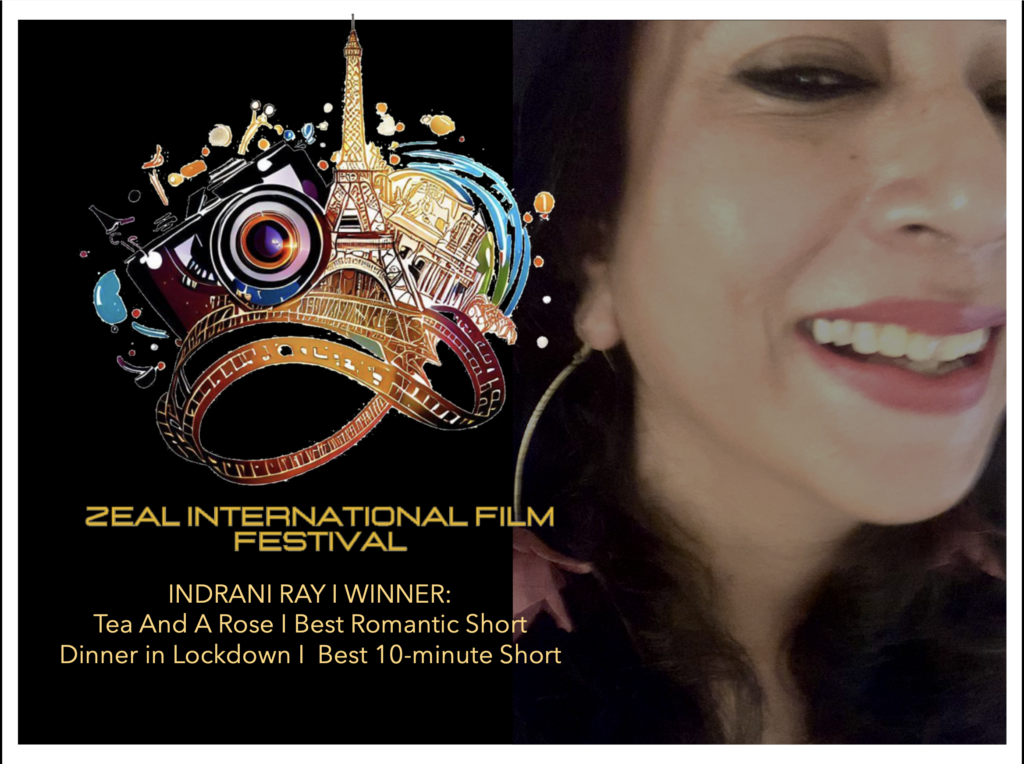
That Tea and a Rose won three Best Romantic Short awards, including yours – thank you very much J. A nod from France for a romantic film will always be extra special. Still gobsmacked that a quiet December romance received so much love. It is deeply heartening. Also, I discovered Adil has a major, major female fan following.; p
What do you hope viewers carry with them after watching Tea And A Rose?
That romance doesn’t come with a “sell by” date. There is no set age or time for love. When it finds you, go for it. It is one life, after all. And that it can blossom in the most unlikely spaces. And that the butterflies in the stomach don’t change fundamentally – the first flush – the awkwardness, the joy – the need to put your best foot forward… yes, it’s all a bit quieter, but it’s all there.
Who would you like to acknowledge and credit for the success of this project?
It always takes a village – right? And making three films in under six months remotely, during one of the most difficult chapter of human history in recent times, was a task and a half. Thankfully everyone showed up with their A-game. My producing partner, my associate, my stellar micro-crew spread across Delhi, Bombay, Goa, Calcutta, Manhattan, Florida – most of whom I’d never even met physically, including close collaborators DoP Karan Thapliyal (Academy winner The Elephant Whisperers) and Editor Eunah Lee.
Aesthetics are key to my filmic language – Karan being able to bring my vision to life and Eunah lending that softness the story needed, were God’s gifts. Above all, Adil (magnanimous to a fault) and Natasha (she opened up her gorgeous farmhouse as film location making it all possible – bless her). They brought that je ne sais quoi and gentle oomph which was so crucial for the script to work. It was all magical. It’s one of those memories that will stay with me forever. I remain wholeheartedly grateful.
What advice would you offer to aspiring filmmakers?
Advice sounds daunting. But yes, if you can feel a story and see it visually and are possessed by it, find a way to make that film. There is no right or wrong way. It may take a while – like it happened with me, or it may not, but if this is what makes your blood sing – hang in there.
As Quentin Tarantino said – just go make the film!