
An Interview with Richard C. Mills on His Audio Drama "Homicide at Heavensgate"
Logline:
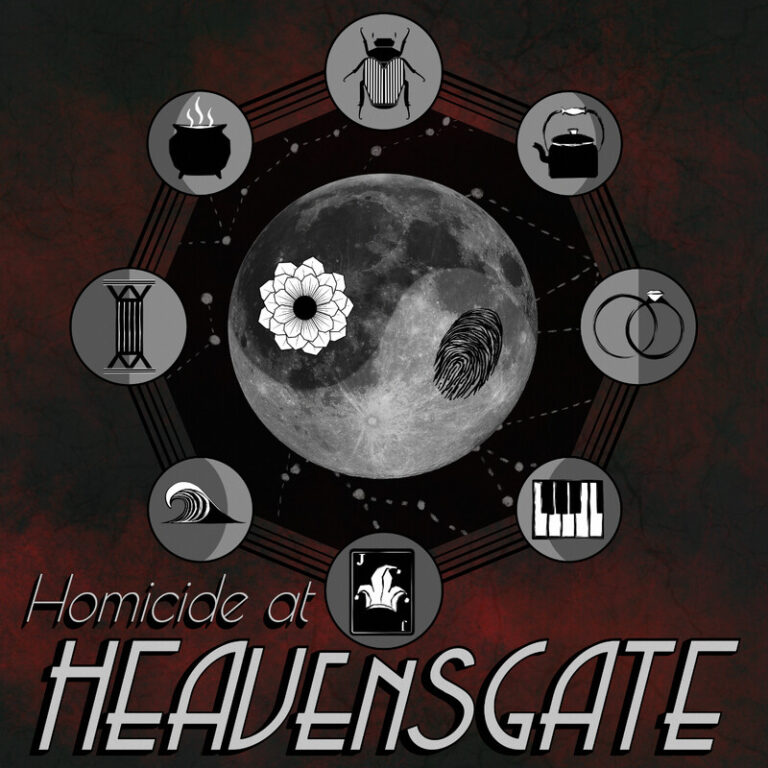
When a mysterious guest is found dead during the grand opening of the first lunar resort, two detectives are sent to investigate. What they find is a rich assortment of potential suspects, and the emergence of a mystery that goes deeper than they imagined.
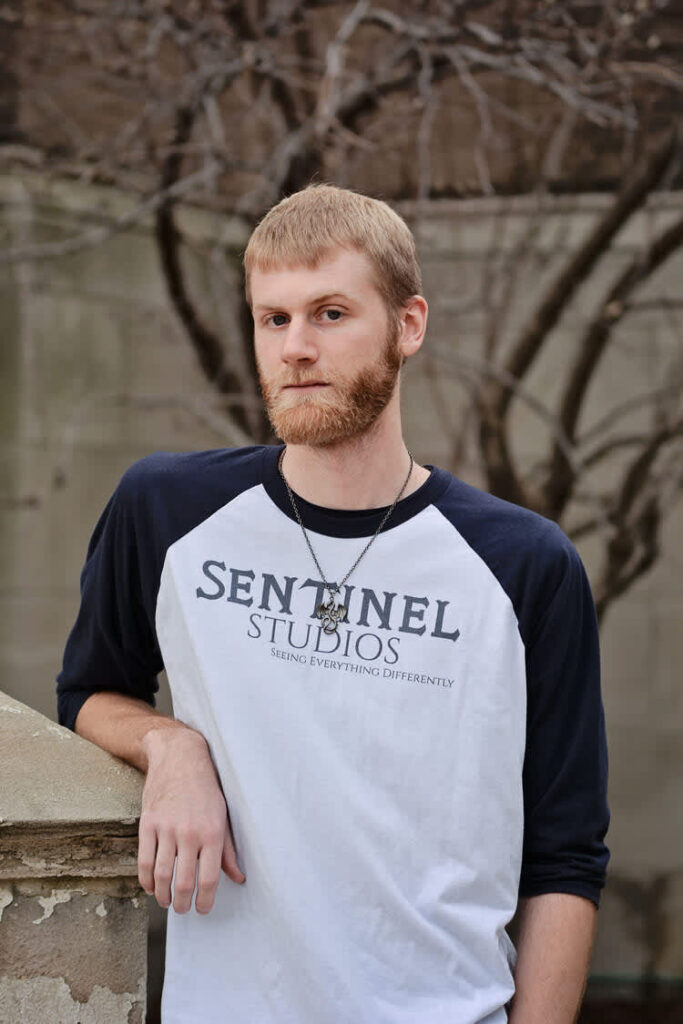
Homicide at Heavensgate is set in the first lunar resort. What inspired you to place a murder mystery in such a futuristic and otherworldly setting?
I think the setting was actually the first thing we came up with. The harsh black and white contrast of the moon just seemed to ooze potential for a futuristic film noir story. It also helped us by putting a pretty hard limit on the scope. Since this was our first major multi-cast production, we wanted to make sure the setting wasn’t too inviting (despite A.L.F.R.E.D.’s best efforts at providing a 5-star stay) for any kind of ‘scope-creep’. Characters couldn’t go running away. Our detectives didn’t have to drive across town for interviews. Everything was right there in one location.
The story combines elements of classic whodunit mysteries with a sci-fi backdrop. How did you balance these genres without overshadowing one another?
Once we found the fusion point (noir murder mystery in a lunar hotel), I started trying to dial down and surround it with concepts and themes that reinforced that point as well as each other. I decided I wanted to play some with the ideas of inevitability: The inevitability of tech to push forward while also coming full circle, and the inevitability of crime and conflict to follow mankind wherever we go. Noir and Cyberpunk (which itself is kind of a descendant of noir) are both often very nihilistic, so that theme seemed to fit well, but it presented me a question: Could I tell a story about inevitability without the premise itself being predictable, or would a predictable plot reinforce the theme I was building towards? I ended up deciding on the latter, and so it became more of a character story that existed in the shell of a generic whodunit premise. That’s also why I tend to refer to it as a Murder Mystery, instead of a whodunit. Ultimately, to me, it’s not just about who the killer is. There are deeper mysteries in play. I also didn’t want it to be as “grimy” a world as dystopian or cyberpunk often tends to feel, so I pushed further into the noir side and started incorporating some jazz and art deco vibes. Then I filled in with some mythological and esoteric undertones and symbolic characters.
If Homicide at Heavensgate were to be adapted into a film or series, how would you envision it visually compared to the podcast format?
I think a visual medium would be a chance to really scale up the hotel’s character. We had lots of hotel ambiances and voices for the hotel staff droids to try and convey how technologically sophisticated it was, but being able to really see what a fully autonomous hotel might look like would be really cool! Maybe our detectives have to chase down a clue (or suspect) through the mechanical guts of the hotel…
What were the biggest challenges you faced in bringing such a complex and imaginative story to life through the medium of audio?
I’m going to give the generic artist answer and say time. I was working several part-time jobs all throughout the production (one of which would sometimes go fulltime and/or overnight for a month here and there because of Covid), and early in the writing phase our daughter was born. I know neither of those things were unique challenges to me or this production, they’re just things everyone goes through in life, but it made any kind of creative rhythm hard to come by. My sound designer was also working full-time (and often overtime) with another podcast company, and was battling some health challenges (like the aforementioned Covid), so he wasn’t able to get to it as soon as he liked, so we had some production delays where we just didn’t know when it would be done…
How do you design audio environments that make listeners feel they’re inside a lunar resort?
Honestly, a lot of it is in the reverb. If the sounds don’t sit right or sound like they interact with the space they’re in, it’s can throw you off and make it hard to “see it in your mind” as a cohesive whole. I remember one particular instance in episode one, when Bianca and Cole first enter the Hotel: We already had a really cool, jazzy background track from our composer, and I thought it sounded really good…but then my sound designer put the feintest reverb on the music, and it completely transformed the space. Now the music sounded like it was being played from somewhere in the room, and because of that, I felt like I could visualize the carpet, and the ornately carved front desk. It just opened up the entire scene for me from a visual perspective. We also played a lot with making the footsteps a little slower than normal to simulate trying to walk with less gravity.
As both writer and director, how do you balance your creative vision with the practicalities of audio storytelling?
It’s actually super helpful for me! I think I’m a more practical writer in general, and knowing and planning for the strengths and constraints of an audio-only format from a deep story level really helps me keep things in scope. Wearing both hats is also nice because the feedback loop is pretty instantaneous, so in recording sessions with the actors I rarely have to stop and figure out what the writer meant with this line, though sometimes that still happens. It also makes revising things on the fly in recording sessions a lot easier.
Were there particular influences—books, films, or podcasts—that shaped your approach to Homicide at Heavensgate?
The Deus Ex video game franchise was a huge influence to me in general, and in the project especially helped inspire how to make a stylized and close-to-home sci-fi world with esoteric underpinnings. The Expanse was a huge inspiration in terms of realistic and compelling sci-fi. Detective Miller struck a compelling balance of an old-school detective living in a sci-fi world that I wanted to emulate. There was also a movie called ‘Rememory’ that was pivotal in initially helping us unlock and shape Cole’s character.
Looking forward, what kind of stories do you hope Sentinel Studios will tell in the next few years?
We’re actually in post-production for the sequel to Homicide right now. When writing Homicide, I was adamant that it would be a one-off story, because there were so many other projects I wanted to work on. But as as a way to keep my head in the space amid the productions delays, I found myself coming up with scenes and snippets and saying “If there was a sequel, this is how it would start.” And now here we are… It was super fun and fulfilling to “run it back” with the same team, and be able to watch these characters grow. The sequel is called Suicide in Santa Fe, and we’ll be releasing it as a Season Two on the Homicide RSS feed. After that, we’ve got an idea for a horror story set in the North Woods of Wisconsin that we’re still fleshing out, and there’s a Gothic Fantasy story that just won’t leave me alone…
How do you measure success for a project like this—critical acclaim, audience engagement, or something more personal?
First and foremost is personal fulfillment. Writing has a deeply spiritual component to me, as I believe creating things is an act of imaging our own Creator, and so is a worshipful collaborative experience. Awards are cool external validations, and it always means a ton to know that people connect with the stories we tell, but at the end of the day, every time I create, I’m able to connect with who I believe is the greatest storyteller, and offer up what I’ve made…and if his pleasure is anything like what I feel when my 5 year-old daughter gives me a drawing she just finished, that’s success enough for me.

'We hope you enjoy your stay!'
If you could collaborate with any writer, director, or sound designer (living or past), who would it be and why?
Brent Weeks is my favorite writer, and it would be crazy cool to maybe dramatize one of his books or collaborate with him at some point in my life. Apart from that, I love the team I have right now! My wife is the illustrator and graphic designer, and getting to work on these things with her has been more of a blessing than I ever could’ve asked for. I also already have the sound designer of my dreams in Dayn Leonardson, who’s a solid 8 out of 10 (that’s an inside joke)
Who would you like to acknowledge and credit for the success of this project?
Definitely my wife and co-creator Jordan for being my creative companion, and constant source of encouragement. She’s also our illustrator and graphic designer, and every time we show Homicide at a convention, we draw people just because of the character art. I’m also super grateful for the entire cast. When I was writing this, I was envisioning a smaller-scale production that would be more for practice than anything else. I mentally had slotted a few theater friends I knew in person for some of the roles, but I threw together a casting call anyway, and just let it fly to see what would happen. After that we found ourselves waking up to tons of auditions from super talented actors, some of which I had heard in other podcasts for years! I remember my wife and I going on a long walk after listening to some of those auditions (I think it was David Ault’s audition for A.L.F.R.E.D.) talking about how much these actors would elevate this production and how we probably needed to up our budget to pay for them. I also want to thank my parents, and both of our families, who have always encouraged us to pursue our dreams and have helped us in innumerable ways as we’ve tried!
What advice would you give to aspiring podcast creators looking to break into narrative audio drama?
I think audio drama is super special. It’s not just a cheaper stepping stone for film (though it definitely can lead that way), it has strengths all it’s own. It can go places no other creative medium can go. You can tell the stories people listen to on their commute. Your stories can help motivate people while they’re running, or maybe even get them through a shift of their manual labor job. You can be there for people during hard parts of life when no other medium can.
Finally, what do you hope listeners take away after finishing Homicide at Heavensgate?
I don’t really love prescribing takeaways, just because I think stories can and should hit different people differently. But I’ll say that my biggest takeaway from working on this story is that while we love looking at things in black and white, just because there’s disagreement doesn’t necessarily mean any of the sides/parties are right or wrong. Values or strong preference for anything pushed far enough will always and inevitably lead to conflict. That’s unavoidable, but it’s how I respond to situations of conflict that really matters.
Listen to the Audio Drama Here:
